Expert Rhino Piercing by the Best Specialists in London | Online Reservation for Consultation
In the highest echelons of body art, beyond the well-trodden paths of classic placements, lies a realm of the truly extraordinary. These are the piercings of the avant-garde, the connoisseur, the individual who sees the body not just as a canvas, but as a three-dimensional sculpture waiting to be defined. The Rhino piercing is a breathtaking inhabitant of this exclusive world. It is a piercing of stark, defiant, and beautiful geometry—a single, powerful vertical line that transforms the very tip of the nose into a deliberate work of art. It is one of the rarest and most striking facial piercings in existence, a statement of unparalleled confidence and a testament to a deep appreciation for the craft’s most daring possibilities.
However, the immense aesthetic power of the Rhino piercing is intrinsically bound to a profound and challenging reality. This is not a standard procedure. It is an advanced, anatomically-specific piercing that carries a significant risk of complications and requires a level of precision and expertise that few possess.1 Its success is a delicate balance of “one-in-a-million” anatomy, a master artist’s flawless technique, and a client’s unwavering commitment to a long and difficult healing journey. It is, in every sense, a specialist-only procedure.
At midnightt, our private, appointment-only studio is a clinical sanctuary where such advanced and specialist procedures are our forte. We approach every request for a Rhino Piercing in London with the meticulous care, clinical seriousness, and expert assessment it demands. This is your definitive, honest, and in-depth guide to this iconic and high-stakes piercing. We will not sugar-coat the risks. We will provide a transparent look at the anatomy, our precision-focused procedure, and the reality of its healing journey, empowering you to make a fully informed and responsible decision.
Deconstructing the Rhino: A Statement of Verticality
To truly appreciate this piercing, one must first understand its precise anatomical path and the unique aesthetic it creates. It is a piercing that plays with dimension and perspective in a completely new way, creating a line where none existed before.
Rhino Piercing
What is a Rhino Piercing, Anatomically Speaking?
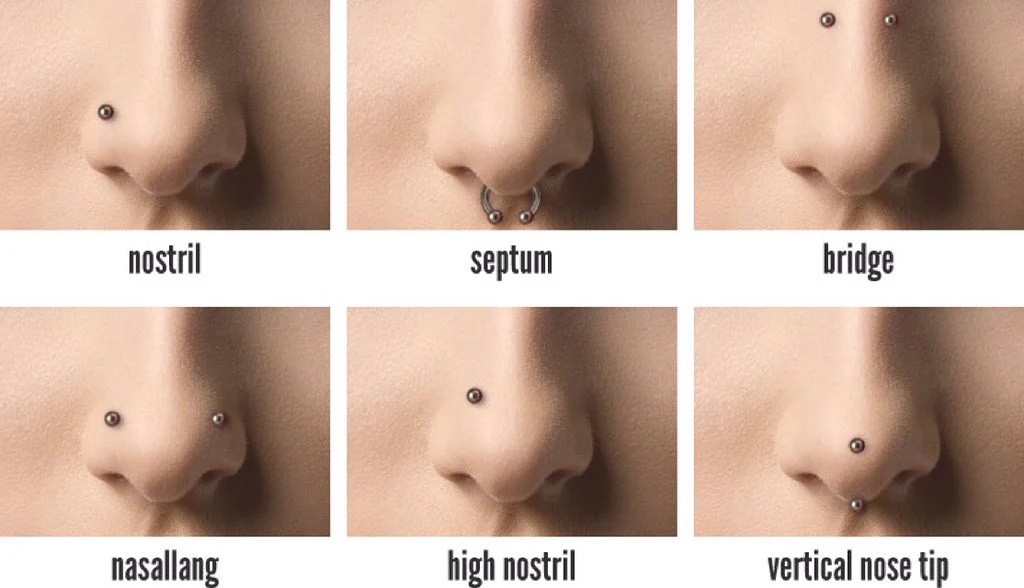
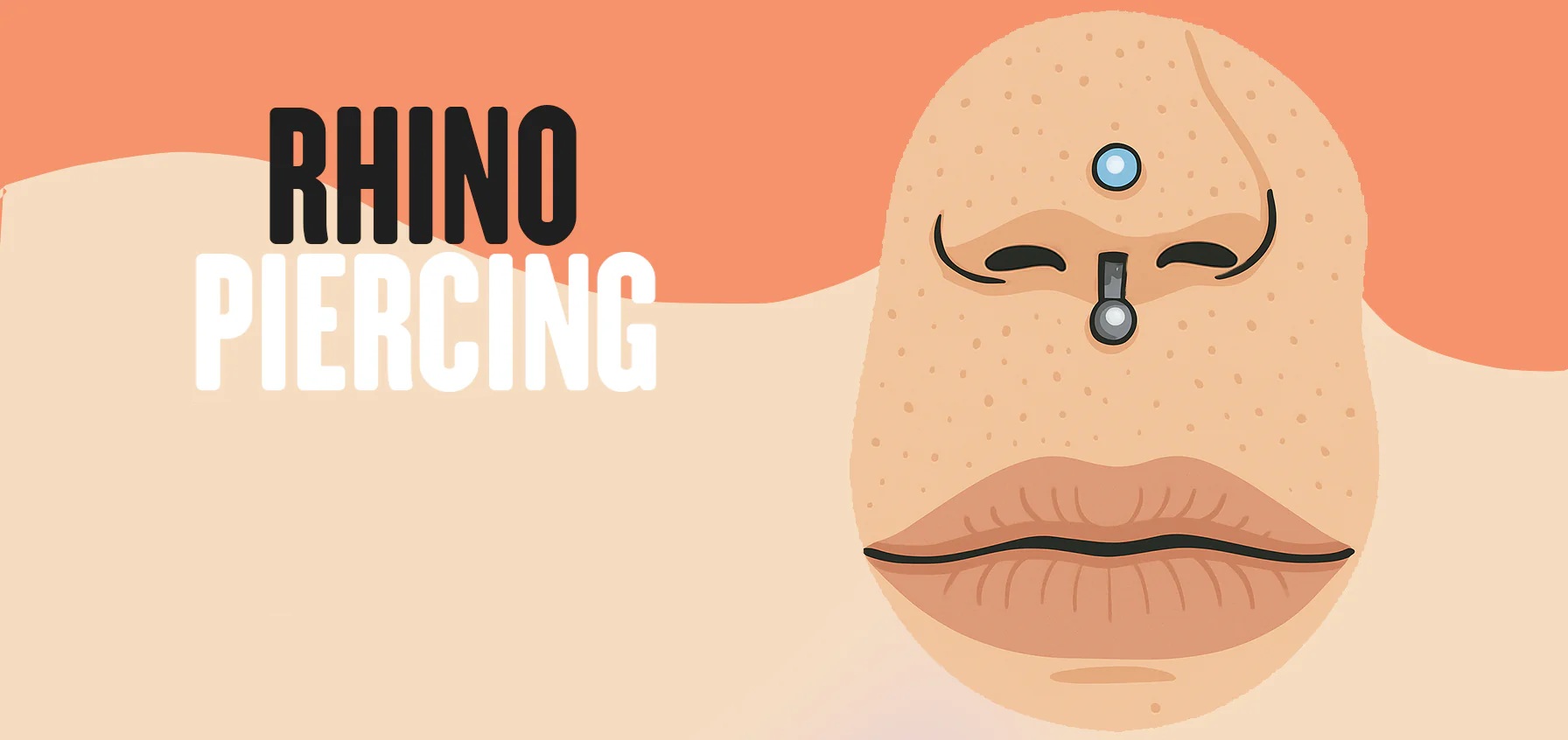
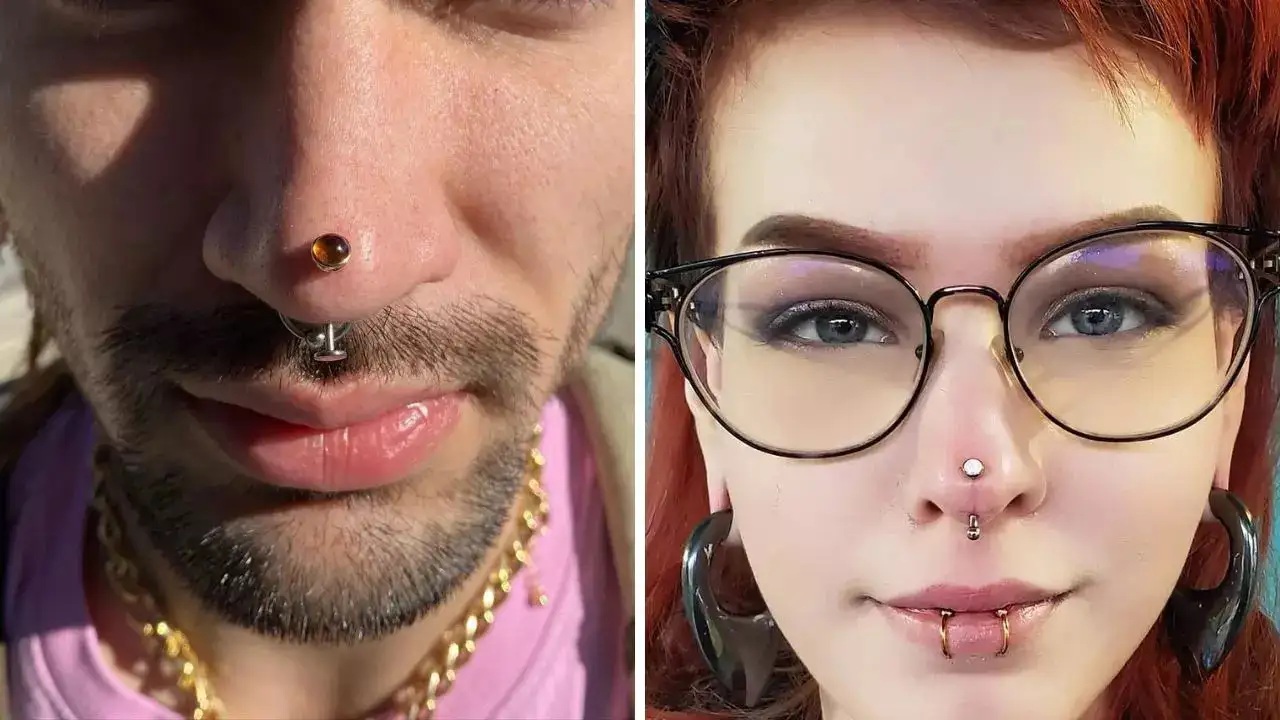
A Rhino piercing, known professionally as a vertical tip piercing, is a piercing that passes vertically through the very tip of the nose.2 The piercing channel starts on the upper surface of the nasal tip (in the area known as the supratip) and exits on the underside, just above the septum. It is pierced with a curved barbell, and the final look is of two decorative ends, one sitting on top of the nose’s tip and one peeking out from underneath, creating a powerful vertical line
It is crucial to differentiate this from other nose piercings:
- It is not a nostril piercing (which is on the side).
- It is not a septum piercing (which is through the dividing wall between the nostrils).
- It is not a Nasallang (which is a horizontal tri-nasal piercing).
The Rhino inhabits its own unique and challenging anatomical landscape. The path of the piercing travels through the dense, fleshy tissue and cartilage that make up the structure of the nasal tip.3 This is what makes the procedure so technically demanding and the healing so complex. A successful Rhino Piercing in London is a true feat of anatomical navigation.
The Aesthetic Power: The Allure of the Unexpected Line
The allure of the Rhino piercing lies in its bold, unconventional, and architectural presentation.
- A Powerful Vertical Statement: It creates a strong, deliberate vertical line on a part of the face that is usually defined by horizontal and curved features.4 This stark geometry is incredibly eye-catching and modern.
- Accentuating the Nasal Tip: The piercing draws direct attention to the shape and structure of the nose’s tip, highlighting this central feature in a way no other piercing can.
- A Mark of the True Connoisseur: Because the Rhino is so exceptionally rare, anatomy-dependent, and difficult to heal, successfully getting and healing one is seen as a mark of a true piercing enthusiast and collector. It is an “if you know, you know” placement that signals a deep commitment to the art form and an appreciation for its most advanced and daring manifestations. This exclusivity is a key part of its appeal.
The Absolute, Non-Negotiable Anatomy Check: The Foundation of Viability
This is the most important section of this guide, and the conversation that every ethical piercer will have with you before they even pick up a marker. The Rhino Piercing in London is one of the most anatomy-dependent piercings you can get.5 Not everyone has the right nasal structure to support it, and attempting it on unsuitable anatomy is a guarantee of failure.
What Our Specialists Look For: The “Goldilocks” Nasal Tip
A professional piercer at midnightt will always begin with a thorough, hands-on anatomical assessment. For a Rhino piercing, they are looking for a very specific set of characteristics in your nasal tip:
- A Well-Defined and Fleshy Tip: The primary requirement is a well-defined nasal tip with a substantial amount of soft, pliable tissue. The piercer will gently but firmly pinch the tissue. They need to be able to get a good “pinch” to create a deep, stable piercing channel.
- Cartilage Structure: The piercer will be assessing the underlying septal and alar cartilages. The tip of the nose cannot be too “cartilaginous” or rigid. If the cartilage is too prominent or thick in the proposed piercing path, it can make the procedure extremely difficult and the healing almost impossible due to the pressure on the rigid tissue.
- Overall Shape and Symmetry: The piercer will look at the overall shape of your nose to determine the most aesthetically pleasing angle and exit point for the piercing.
Rhino Piercing
The Unavoidable Consequences of Piercing Unsuitable Anatomy
An inexperienced or unethical piercer might ignore these strict anatomical requirements. This is a recipe for almost certain and very visible failure. A piercing forced into a nasal tip that is too small, too thin, or too cartilaginous will lead to a cascade of painful issues:
- Guaranteed Migration and Rejection: A shallow piercing is an unstable piercing. The body will identify the jewellery as a “splinter” and will begin the process of actively pushing it out of the tissue. For a Rhino, this means the piercing will slowly emerge from the top of your nose, leaving a noticeable and permanent scar right in the centre of your face.
- Excessive Pain, Swelling, and Scarring: A piercing that is under constant tension from being in unsuitable tissue will be chronically painful and swollen. The high likelihood of rejection often leads to significant hypertrophic scarring.7
- A Piercing That Will Never Heal: The constant tension and movement will prevent the fistula (the tube of healed tissue) from ever forming properly, leaving you with an open wound that is perpetually irritated and prone to infection.
An honest piercer who tells you that your anatomy is not suitable is not trying to disappoint you; they are protecting you from a painful, expensive, and scarring experience. This integrity is the ultimate hallmark of our professional Rhino Piercing in London service.
The Professional Procedure: A Masterclass in Precision and Angles
If your anatomy is one of the rare few that is perfectly suited, the procedure itself is a highly technical one that requires a piercer with exceptional skill, confidence, and a masterful understanding of three-dimensional angles.8
A Step-by-Step Walkthrough of the Procedure at midnightt
- The In-Depth Consultation and Meticulous Marking: The appointment begins with the final, crucial anatomy check. The piercer will then use a sterile marker to place the entry dot on the top of your nasal tip and the exit dot on the underside, ensuring a perfectly vertical channel that works with the unique structure of your nose. This requires an expert eye for three-dimensional composition.
- The Piercing Moment: You will lie down comfortably. The piercer will coach you through your breathing. Due to the angle, a Rhino Piercing in London is often performed freehand (without clamps) by a skilled practitioner to avoid distorting the tissue.9 On your exhale, the piercer will pass a long, single-use, sterile needle vertically through the tissue in one smooth, controlled motion. They will often use a receiving tube to support the tissue at the exit point.
- The Jewellery Transfer: The initial jewellery, which must be a curved barbell made of implant-grade material, is then seamlessly inserted into the new channel.10 A straight bar is not suitable as it does not match the curved anatomy of the nasal tip.11 The ends are secured, and the area is cleaned.
An Honest Assessment of the Pain
Due to the density of the tissue and the number of nerve endings in the tip of the nose, the Rhino is widely considered to be a high-pain piercing.12 Most clients rate the pain at a 7 to 9 out of 10. The sensation is an intense, sharp, and deep pressure that will almost certainly make your eyes water. The area will have a significant, throbbing ache that can last for several days afterwards as the swelling sets in.
The Healing Journey: A Marathon of Patience and Care
The Rhino piercing has a well-earned reputation as one of the most difficult and prolonged healers for a facial piercing. You must be fully prepared for this commitment.
The Unforgiving Healing Timeline: A 9-18 Month Commitment
Due to the thickness of the tissue and the constant micro-movements of the face, you should expect a healing time of at least 9 to 18 months, and for many, it can be up to two years before it is truly stable and mature.
| Healing Phase | Typical Duration | What to Expect & Key Challenges |
| Inflammatory Phase | Weeks 1-4 | Significant swelling, redness, and tenderness. A throbbing ache is common. Bruising around the nose is possible. |
| Granulation Phase | Months 2-6 | Swelling subsides, but the piercing is very fragile and prone to “fussy” periods. Irritation bumps are very common if disturbed. |
| Maturation Phase | Months 7-18+ | The piercing will look and feel healed, but the long internal fistula is still strengthening. Can still flare up easily. |
The Ultimate Aftercare Routine
Healing a Rhino is about creating an environment of absolute zero irritation.
- Cleaning: Clean 1-2 times a day with a sterile saline solution spray. Be very gentle.
- Drying: Thoroughly dry the area with non-woven gauze.13 Do not rub.
- Sleeping: Do not sleep on your face. You must sleep on your back for the initial healing period.
- Glasses: You absolutely cannot wear glasses that rest on the piercing. If you wear glasses daily, this is not a viable piercing for you.
- Snagging: Be incredibly mindful of snagging the piercing when pulling clothes over your head or drying with a towel.
Rhino Piercing
Frequently Asked Questions (FAQ)
1. Why is the Rhino piercing so anatomy-dependent?
It requires a very specific nasal tip shape: one that is fleshy and pronounced enough to safely house the long, vertical piercing channel without putting the tissue under tension. A flat, bony, or very cartilaginous nasal tip does not have the right structure, and a piercing there would almost certainly be rejected by the body.
2. I wear glasses every day. Can I get a Rhino piercing?
Almost certainly not. The bridge of your glasses will rest directly on or very close to the top of the piercing. This constant pressure will make healing impossible and will lead to certain rejection. If you are a daily glasses wearer, an ethical piercer will advise you against this piercing for your own safety.
3. I have a bump on my Rhino piercing. What should I do?
First, do not panic. It is almost certainly an irritation bump, not an infection. The key is to identify and eliminate the source of the irritation (sleeping on it, bumping it, etc.). Book a check-up with your piercer immediately. They can help you troubleshoot the cause and formulate a plan. Do not apply any unverified home remedies.
4. How much does a high-quality Rhino piercing cost in London?
Due to the extreme anatomical dependence and the high level of technical skill required, the Rhino is one of the most advanced and expensive facial piercings.14 In 2025, you should expect to pay a service fee of around £60-£90 for a Rhino Piercing in London, plus the cost of the initial implant-grade titanium curved barbell.
5. I was told my anatomy isn’t right, but I love the look. Are there any alternatives?
A true vertical tip piercing has no direct alternative. However, a skilled piercer can work with you to find other piercings that create a powerful central focus on your face. A perfectly placed Medusa and Septum combination can create a stunning vertical line. Paired high nostrils can also create a beautiful, unique look that draws attention to the nose.
Conclusion
The Rhino piercing is the embodiment of high-risk, high-reward in the world of body art. It is a piercing of uncompromising boldness, a rare gem for the true collector.15 The journey is long, demanding, and it is not a path for the impatient or for every anatomy. However, for the select few with the perfect canvas and the unwavering commitment to aftercare, the result is a breathtaking and truly unique piece of body art. A successful Rhino Piercing in London is the pinnacle of a professional partnership, and at midnightt, our primary role is to provide the honest, expert consultation to determine if this journey is right for you.